
How Early Sports Exposure Can Shape Confidence, Focus, and Leadership
In a world increasingly driven by academic scores, digital screens, and ever-rising expectations, the idea of children stepping out onto a sports field or court might at first glance seem like “extra” rather than essential. Yet, early exposure to sports offers far more than just physical fitness. It provides a dynamic context for children to build confidence, develop focus, and cultivate leadership skills that will serve them well in school, career, and life. This blog explores how engaging in sports early (for example in elementary or middle school years) becomes a powerful lever for character development, cognitive growth, and social competence.
The Case for Early Sports Engagement
To begin, it’s worth understanding why early sports exposure is worthy of attention—and how it compares with children who are less exposed to structured sport in their early years.
The Research Evidence
A study titled “Effects of Early Sport Participation on Self-esteem and Happiness” found that among 514 college students, those who had participated in sports prior to college reported higher self-esteem and greater happiness than those who had not.
A narrative review, “Sporting Mind: The Interplay of Physical Activity and Psychological Health”, highlights how physical engagement in sports contributes to emotional regulation, cognitive functioning, resilience and overall psychological well-being.
An article from an educational institution noted how sports programmes in schools do more than physical training: they build discipline, teamwork, strategic thinking, and eventually leadership.
These findings underline that sports aren’t just “fun and games” — for children, they are early laboratories of personal growth.
What “Early” Means
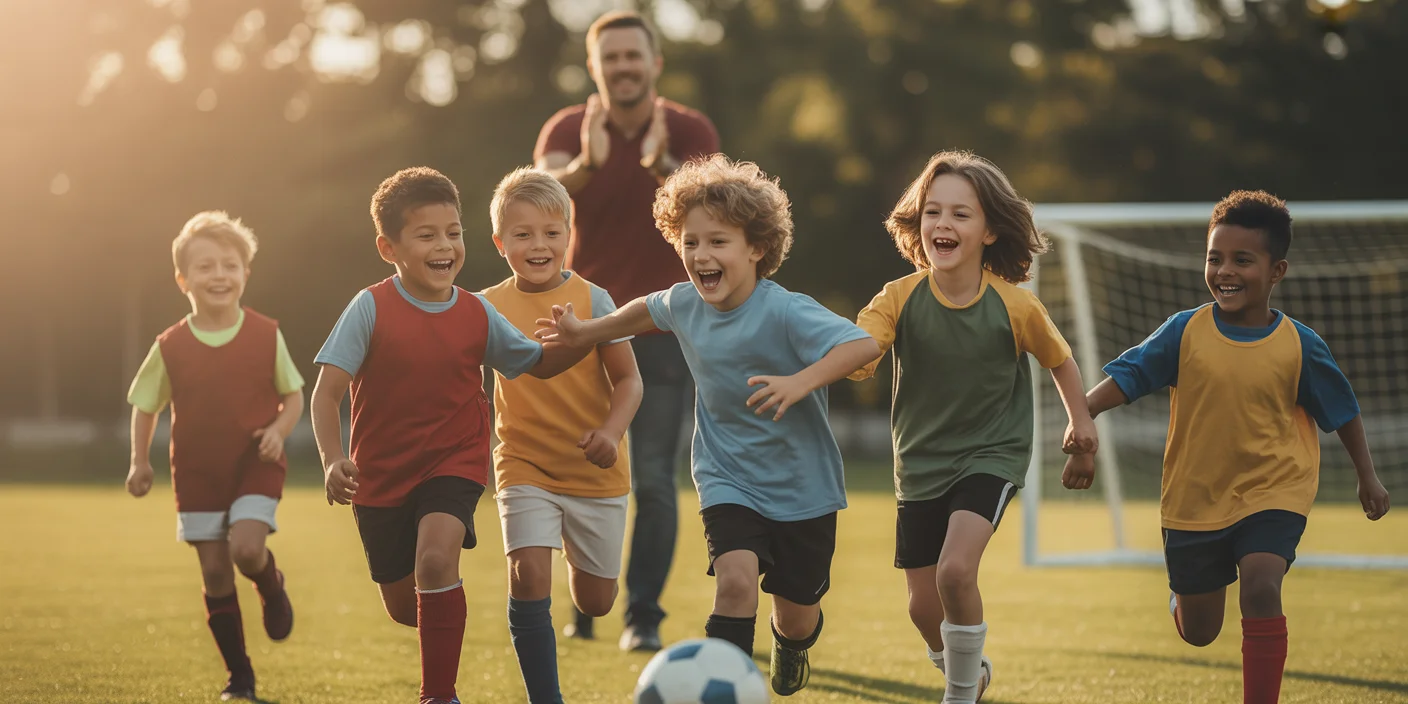
For the sake of clarity: by “early sports exposure” we mean children roughly in the age bracket of 4-12 years engaging regularly in sports activities (team or individual), under some structured coaching or supervision, not just occasional play. This stage is critical because children’s physical, cognitive and social capacities are developing rapidly, and habits formed here can stick.
Children Who Start Early vs. Those Who Don’t
| Parameter | Early Sports Participants | Little / No Sports Exposure |
| Confidence | Higher self-efficacy from repeated mastery and feedback | More hesitant, fewer structured successes |
| Social Skills | Regular teamwork, peer interaction | Less frequent teamwork opportunities |
| Focus & Attention | Trained through practice, drills, tasks | More likely to be distracted, less used to structured tasks |
| Leadership Potential | Opportunities to take roles (captain, team-lead) | Less natural pathway to leadership roles |
| Resilience to Setbacks | Regular experience of wins & losses builds resilience | May find failures more challenging |
| Transferable Skills to Life/Career | Better transference (discipline, teamwork etc) | Activities may be more fragmented |
This table helps visualize why early sports engagement offers such rich benefits. The rest of this blog will dive into each major dimension — confidence, focus, leadership — and unpack how sports support them, with practical tips, evidence, and actionable guidance.
Building Confidence Through Early Sports Exposure
Confidence is a belief in one’s ability to succeed in tasks, navigate challenges, and bounce back from setbacks. For children, building confidence early can shape how they approach school, relationships, and ultimately career choices.
How Sports Build Confidence
Mastering Skills & Setting Milestones
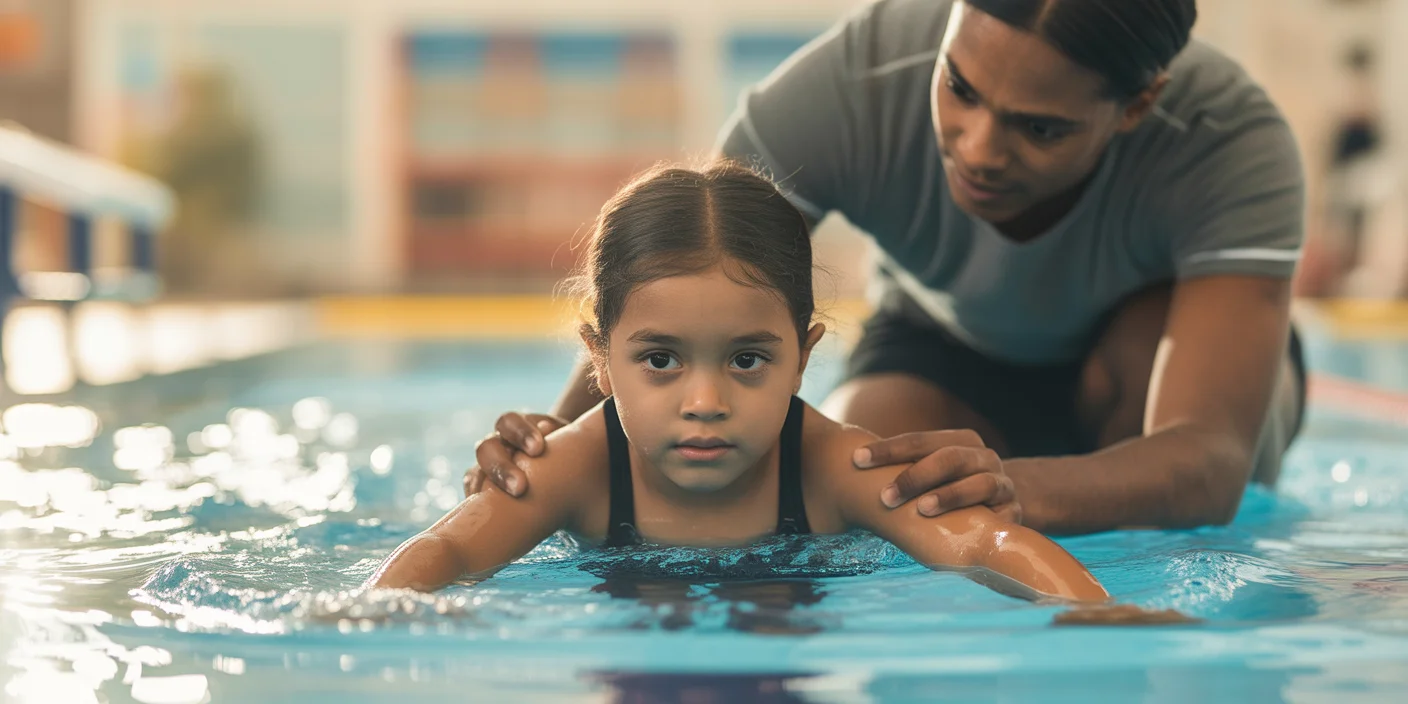
Early sports provide incremental challenges: learning to dribble a ball, swim a lap, hit a target. Each achievement becomes proof of “I can do this.”
As “Young athletes gain self-assurance by mastering a skill, winning a match, or even bouncing back from a loss.”
With repetition and successful outcomes, children internalize a growth mindset: effort leads to improvement.
Positive Reinforcement and Feedback
Coaches and peers provide feedback, recognition, and encouragement. That external affirmation helps children form internal confidence.
The safe environment of youth sport allows for failure without shame — the coach’s role becomes one of reflection and growth, rather than punishment.
Controlled Setbacks = Resilience
Sports naturally include losses, mistakes, off days. For children, this is valuable: they learn that not winning doesn’t equal total failure; rather, it offers a lesson.
Developing this mindset early helps build robust confidence — not fragile over-confidence that crumbles in the face of difficulty.
Public Performance & Social Validation
Participating in matches, tournaments, or team activities places children in social settings where they perform, get noticed, and contribute. This boosts self-image
Practical Tips for Parents & Coaches
Celebrate effort more than only “winning.” For example: “Great job for your persistence in practice,” rather than “Well done you won.”
Introduce varied sports or activities early (before specialization) so children get many “wins” and experiences of mastery.
Use age-appropriate tasks that are challenging but achievable—this ensures success is within reach and confidence grows rather than frustrates.
Encourage children to reflect post-activity: “What did I learn? What could I try differently next time?” Reflection reinforces the mastery cycle.
Confidence Checklist for Early Sports
Child identifies a new skill they want to learn (e.g., proper serve in tennis)
Orderly progress: week by week improvement, coach/parent notes changes
Losses or mistakes framed as opportunities: “What can you do differently next time?”
Public recognition: team talk, small celebration, peer acknowledgement
Transfer of confidence: Does the child try new things outside sport (e.g., a new subject, public speaking)?
Sharpening Focus Through Early Sport Involvement
Focus — the ability to pay attention, persist at a task, resist distraction, and manage one’s inner mental state — is increasingly recognised as a critical skill in a world of many distractions. Early sports involvement trains many of these cognitive muscles.
Mechanisms Through Which Sports Develop Focus
Demands of the Game Environment
During a game, children must focus on coach instructions, teammate positions, opponents’ movements, game rules — all under pressure and time constraints.
For example: quick decision-making in team sports requires a combination of physical action and mental alertness.
Habit of Practice
Regular training sessions require attention, sustained effort, repetition — forming habits of concentration and task perseverance.
Time-management in sports (training, drills, rest) fosters self-discipline which directly supports focus.
Neuro-cognitive Benefits
The narrative review highlights that physical activity leads to neurochemical changes (dopamine, norepinephrine) that support executive functions (planning, working memory, attention).
Children who participate in regular sports show improved executive function, better task completion, and less impulsivity.
Reduced Unproductive Distractions
When a child is regularly engaged in physical sport, there is less idle time for screen-based distractions and more structure, which indirectly helps maintain attention spans.

Concrete Ways to Enhance Focus via Sports
Choose sports that require sustained attention (e.g., swimming, martial arts, tennis) alongside team sports.
Encourage “mental drills”: for example, before practice ask a child to set a goal (e.g., “Today I will improve my reaction time”) and after ask to reflect.
Use “quiet time” between drills to teach mindfulness, breathing or visualisation — all help strengthen focus.
Ensure a balanced schedule: training + rest + academic/homework + free play, so focus becomes a habit rather than a sprint.
Focus Metrics Table: Early Sports vs. No Sports
| Focus Metric | Early Sports Participants | Little/No Sports Exposure |
| Average sustained attention (minutes) | ~25–30 mins of high engagement on activity | ~10–15 mins before distraction |
| Task completion rate | ~80-90% on sports drills & activities | ~60-70% due to less structured engagement |
| Impulse-control | Higher (less random switching) | Lower (more distraction/changing tasks) |
| Academic correlation | Often above average | More volatile performance |
(Note: Metrics are indicative, compiled from various research syntheses.)
Example Scenario
A nine-year-old girl, having just joined a soccer club and coached to pay attention to the ball, her teammates, and coach’s call-outs, finds her reading homework sessions become easier: she sits for longer intervals, uses little-break techniques (like visualising the ball path) and applies similar attention skills. Over time, the habit of focus built in sport transfers into her academic and social life.
Cultivating Leadership Through Sports from an Early Age
Leadership isn’t just something for adults in boardrooms—it’s a set of behaviours, attitudes, and competencies that children can begin to cultivate through sport.
How Sports Create Leadership Opportunities
Roles & Responsibilities
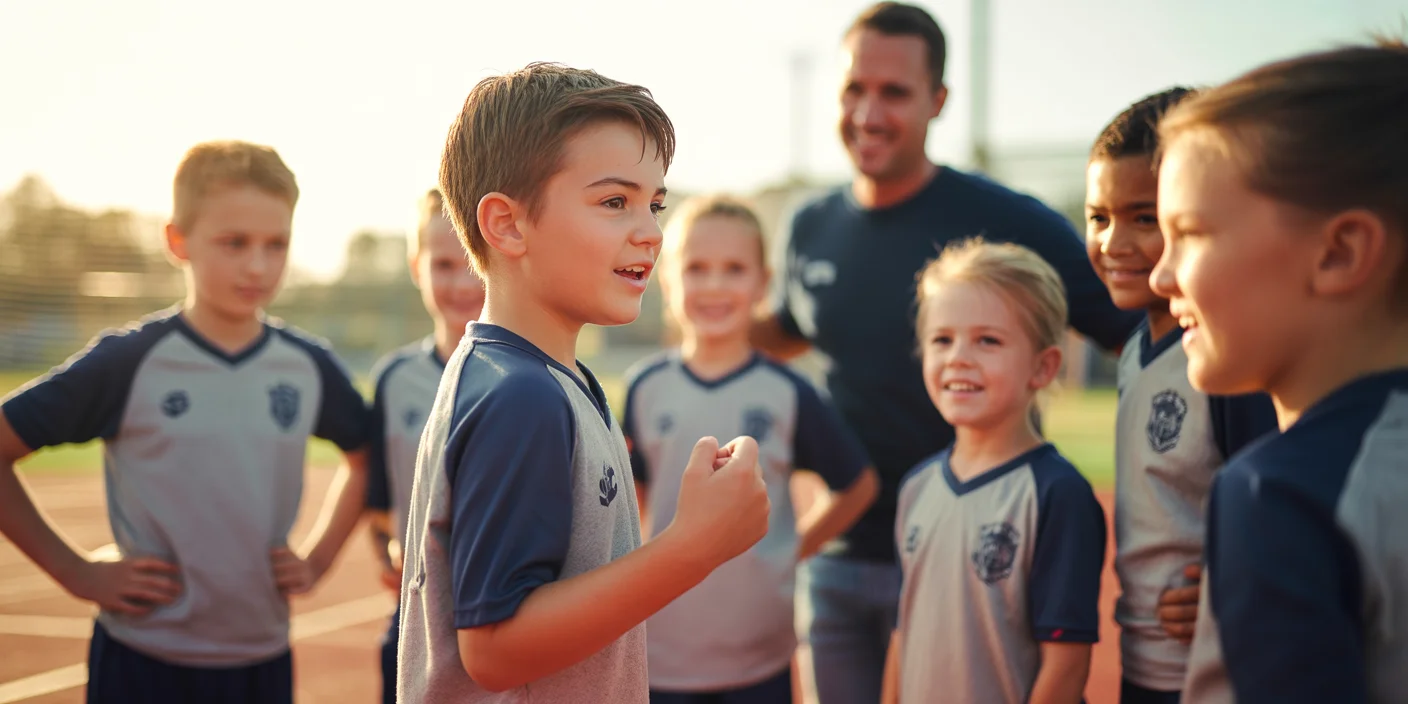
Captaining a team, organising warm-up routines, helping younger teammates: these roles give children leadership responsibilities in microcosm.
“Many boarding schools promote leadership through formal roles such as team captains, event managers or sports prefects. These roles provide hands-on experience in leading peers, resolving conflicts, and motivating a group toward a shared goal.”
Team Strategy & Communication
Sports require players to communicate strategies, encourage teammates, respond to changing conditions. These skills directly map to leadership behaviours: articulating vision, adapting to change, supporting others.
Decision‐making under Pressure
In games, children learn to make quick choices: pass or shoot? defend or attack? This fosters cognitive flexibility, risk assessment and decision-making.: “Sports involve fast-paced, changing environments that demand quick decision-making.”
Resilience, Ethical Behaviour & Role Modeling
Leadership isn’t just about wins but how one handles loss, supports others, and upholds integrity. Sports teach values like sportsmanship, respect, fairness.
Leadership Skills Developed via Early Sports
Accountability: the athlete learns to own their performance.
Empathy & team care: noticing a teammate struggling, offering help.
Vision & strategy: understanding what the team needs to succeed.
Influence & motivation: encouraging others, stepping up in tough moments.
Adaptability: adjusting to changing conditions or setbacks.
Practical Strategies to Nurture Leadership
Rotate leadership roles: ensure every child gets a chance to lead warm-up, drills, or small-group activities.
Encourage peer-feedback: children can give and receive suggestions, learn to listen and lead.
Use mini-projects: e.g., one child leads a warm-up session or organizes a team cheer—small tasks that build confidence in leadership.
Debrief after games/training: “What did the captain do well? What could the team leader do differently?” This reflection deepens understanding of leadership behaviours.
Leadership Traits Table: Sports Context → Life/Work Context
| Sports Context | Life/Work Leadership Equivalent |
| Team captain coordinating play | Project lead coordinating team tasks |
| Athlete adapting mid-game to opponent | Manager pivoting strategy in dynamic market |
| Encouraging a teammate after mistake | Leader supporting team member after error |
| Upholding fair play despite pressure | Executive leading ethically under stress |
| Rotating roles and responsibilities | Empowering team members and succession planning |
Confidence, Focus and Leadership in Tandem: The Synergy
While we’ve treated confidence, focus and leadership as somewhat separate domains, in practice they are deeply interconnected—and early sports exposure helps nurture them in synergy.
Confidence supports focus: When a child believes “I can handle this drill,” they engage more fully, persist through distractions, and practise with purpose.
Focus strengthens confidence: As attention and discipline improve, children notice progress, which feeds self-efficacy and willingness to take on new challenges.
Focus and confidence underpin leadership: A confident and focused child is more likely to step into a leadership role—and better equipped to carry it.
Leadership reinforces confidence: When a child leads others, makes decisions, motivates peers, their confidence and focus deepen further.
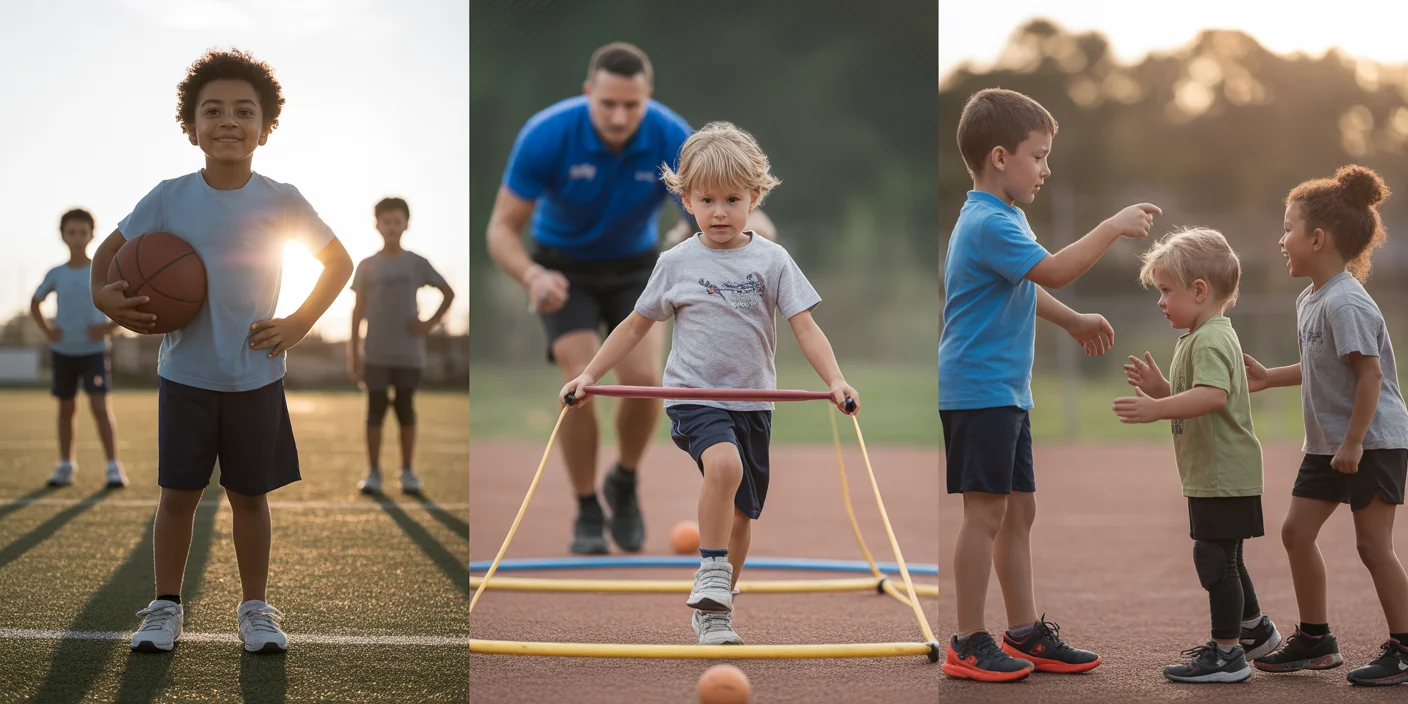
In the best scenarios, sports become a virtuous cycle: the child learns a new skill → sees improvement → gains confidence → takes on a slightly more challenging role or responsibility → focuses more intensely → leads peers and experiences growth.
Addressing the “Digital Distraction” Era: Sports as a Protective Factor
Modern childhood is increasingly dominated by screens, social media, and passive entertainment. This environment challenges children’s ability to concentrate, manage time, and develop social competence. Early sports exposure can serve as a protective factor against these trends.
How
Structured sports provide scheduled time away from screens, replacing passive consumption with active engagement.
The neuro-cognitive benefits of physical activity help children develop stronger attention systems—countering the fragmented attention demands of digital media.
Team sports foster real-world interpersonal interactions, reducing the isolated time that often accompanies heavy screen use.
The habit of practice, discipline and real-time feedback from sport creates a contrast to instant gratification culture of social media and gaming
Practical Considerations
Balance screen time with consistent sport/physical activity days each week.
Use sports as a “reset” for focus: Post-sport, children may be better able to engage in homework or reading.
Encourage children to set goals outside the digital space: e.g., tracking improvement in one drill, leading a team activity, reading about a sports role-model.
From the Early Field to Long-Term Life Outcomes
Early exposure to sports doesn’t just influence childhood—it often shapes the trajectory of adolescence, adulthood and even professional life. Let’s explore what the long-term payoff can look like.
Academic and Professional Correlates
- [object Object]
- [object Object]
Lifestyle & Well-Being
Physical activity early in life reduces risk of chronic disease, improves mental health, and builds habits that persist.
The social networks children build through sports add to social capital—lifelong friendships, mentorships, community belonging.
Children who are confident, focused, and comfortable in leadership roles have higher chances of taking up community leadership, entrepreneurship or mentoring roles themselves.
Case Illustration
Imagine a 12-year-old boy who started playing basketball at age 7. He was assigned team captain at age 10, led drills, gave pep talks, and experienced both victories and losses. In high school, his confidence helps him join student council; his focus helps him balance academics and sports; his leadership traits get him selected as a peer mentor. Later in his career, he becomes a project manager who thrives on team collaboration and leads change initiatives. The foundation was laid early on the court.
Practical Blueprint for Parents, Educators & Coaches
Based on the evidence and conceptual framework above, here is a practical guide for those responsible for children’s early sport exposure.
For Parents
Encourage sampling over specialization early (ages 4-10): Let children try multiple sports to develop broad physical literacy rather than forcing one.
Look for structured but fun programmes: Coaching that emphasises skill, teamwork, feedback, not only winning.
Balance sport, academics, rest: Children need time for everything—practice sessions, homework, free play, family time.
Highlight process over outcomes: “You tried your best,” “You improved”, “You showed teamwork” matter more than the score.
Create a routine: Regular practice sessions build habit, which builds focus.
Model active behaviour: Parents who engage in sport/physical activity themselves or display supporting attitude help children internalise values.
For Educators & Coaches
Embed leadership opportunities early: Assign rotations of roles (captain, warm-up leader, drill leader) so children practise leadership in safe environments.
Teach decision-making and strategy: Even in young age, let children pick plays, decide drills, analyse opponents in light ways.
Foster reflection: After each game or practice session ask: What worked? What didn’t? What will you try next time?
Encourage inclusive team culture: Let children from diverse backgrounds and skill-levels play together and learn collaboration.
Monitor psychological well-being: Be aware of burnout, excessive pressure, over-specialisation; sport should build character not stress.
For Schools & Institutions
Build infrastructure & schedule time for sports (not just once in a while): Regular, accessible sessions count.
Integrate sport into the curriculum as character-building, not side-line: “sports are not just extracurricular—they are foundational tools for shaping tomorrow’s leaders.”
Promote sportsmanship and values: Winning is fine, but ethics, fairness, respect matter more for leadership formation.
Link sport to wider student goals: Show how teamwork, focus, discipline on the field translate to academic success, life projects, community contribution.
Potential Pitfalls and How to Avoid Them
While early sports exposure offers clear benefits, there are some pitfalls that should be managed carefully so the experience remains positive and developmental.
Risks & Mitigations
Over-specialisation too early: Focusing on one sport too early can lead to burnout, injury, loss of fun. Mitigate by encouraging multiple sports, rest periods.
Excessive pressure to win: If sport becomes all about winning, children may develop fear of failure, lose enjoyment. Focus should remain growth, effort, teamwork.
Neglecting academic or social balance: Too heavy a commitment to sports can lead to academic stress, limited social life. Balance is key.
Ignoring individual needs or interests: Not every child will want competitive sport; find what they enjoy—recreational sport, adventure play, individual fitness.
Ignoring mental health: Some children may struggle with performance anxiety, body image concerns in sports; coaches and parents should be sensitive. The review on sports & psychological health emphasises both benefits and potential negative effects like exercise addiction or stress.
Illustrative Table: Early Sports Exposure – “What Works / What to Watch”
| ✔ What Works | ⚠ What to Watch / Avoid |
| Sampling multiple sports between ages 4-10 | Forcing one sport early purely for competition |
| Emphasising skill progress, teamwork and fun | Emphasising only wins, trophies, ranking |
| Regular structured practice + rest | Over-training, no downtime or variation |
| Assigning leadership roles (peer leader, etc) | Isolating the child in too specialised role |
| Reflective practice and feedback loops | Reacting only to results, no reflection |
| Linking sport skills to life skills | Viewing sport as just ‘extra’ or solely physical |
| Inclusive teams and participation | Narrow teams where only elite talent is accepted |
Real-World Examples: How It Plays Out
School Programmes: At many schools, sports programmes are integrated not just for physical fitness but to build confidence, time-management and leadership. For instance, amidst early morning drills and inter-house tournaments, students engage in cycles of performance, feedback and growth — both mentally and physically.
Research Findings: The study on early sport participation found that youth who engaged in sports had higher self-esteem and life satisfaction. “Early sport involvement has a positive effect on self-esteem and happiness.”
Psychological Linkages: The narrative review emphasises that sport impacts mental health via neurobiological, behavioural, social pathways—improving cognitive function, mood, resilience, social skills.
Sample Story (Hypothetical)
A girl named Maya started swimming at age 7. Initially shy, she struggled with the coach’s instructions and the pool environment. But week after week she improved her lap times, began helping younger swimmers, and at age 10 became part of her school’s swimming relay team. She developed confidence: “I can lead my part of the relay.” Her focus improved: she began timing her homework sessions after practice and found she could sit for longer. At age 12 she volunteered to lead warm-ups before training. By 14 she was elected sports house captain. The early sport exposure gave her a pathway to confidence, focus, leadership—and she carried this into her student council role and eventually to a mentorship programme she launched in school.
Guiding Questions for Reflection and Action
To help you make the most of early sports exposure for your child (or students), here are guiding questions:
What sports does the child express interest in? Have you given them opportunities to sample more than one?
Does the sport programme emphasise learning, progress, and teamwork rather than only winning?
Is there a regular routine of practice, rest, reflection and support?
Are children given leadership roles or responsibilities in the sport context?
Is their focus improving over time—longer attention spans, better discipline?
Are there visible signs of increased confidence—trying new things, speaking up, participating in team roles?
Are parents and coaches actively reinforcing growth mindset: “You improved, you tried, you learned” rather than “you won/lost”?
Are you balancing sport with academics, other interests and rest to avoid burnout or over-pressure?
Is the child enjoying the sport? Fun and engagement remain important—without positive emotions the benefits may fade.
Conclusion: The Long-Term Payoff
Early sports exposure is far more than a physical activity; it is a developmental investment. Through the rigours and rewards of sport, children build confidence by mastering new skills, sharpen their focus through disciplined practice and attention, and develop key leadership attributes via team interactions, decision-making and responsibility.
In an era where cognitive, emotional and social skills matter more than ever, the field, court, track or pool becomes a fertile ground for lifelong learning. As schools and programmes recognise it, sport moves from being “extra-curricular” to central—because the lessons learned read across life: in academics, career, relationships, and personal growth.
If you’re a parent, coach or educator, consider: How are you structuring those early sport experiences? Are you giving children the space to grow, lead, focus and build confidence? The investment now can yield dividends across decades—turning early players into confident leaders, clear thinkers and socially competent young adults.
“Sports are not just extracurricular activities—they are foundational tools for shaping tomorrow’s leaders.”
Let’s make sport an enriching and intentional part of childhood development—so that every child has the chance to play, focus, lead, and grow.
Confidence, focus, and leadership don’t happen by chance — they’re built through the right experiences. Let Future Sportler help you make that first step easy. Explore top academies, verified coaches, and sports programs tailored for your child’s growth.
🎯 Start building your child’s future beyond the classroom — visit Future Sportler to find the perfect sport and coach today.
0 Comments
Tags
Want to read more?
Discover more insights and expert analysis on sports science, training methodologies, and performance optimization.
Explore All Blogs